Design System & Component Library
Design System & Component Library
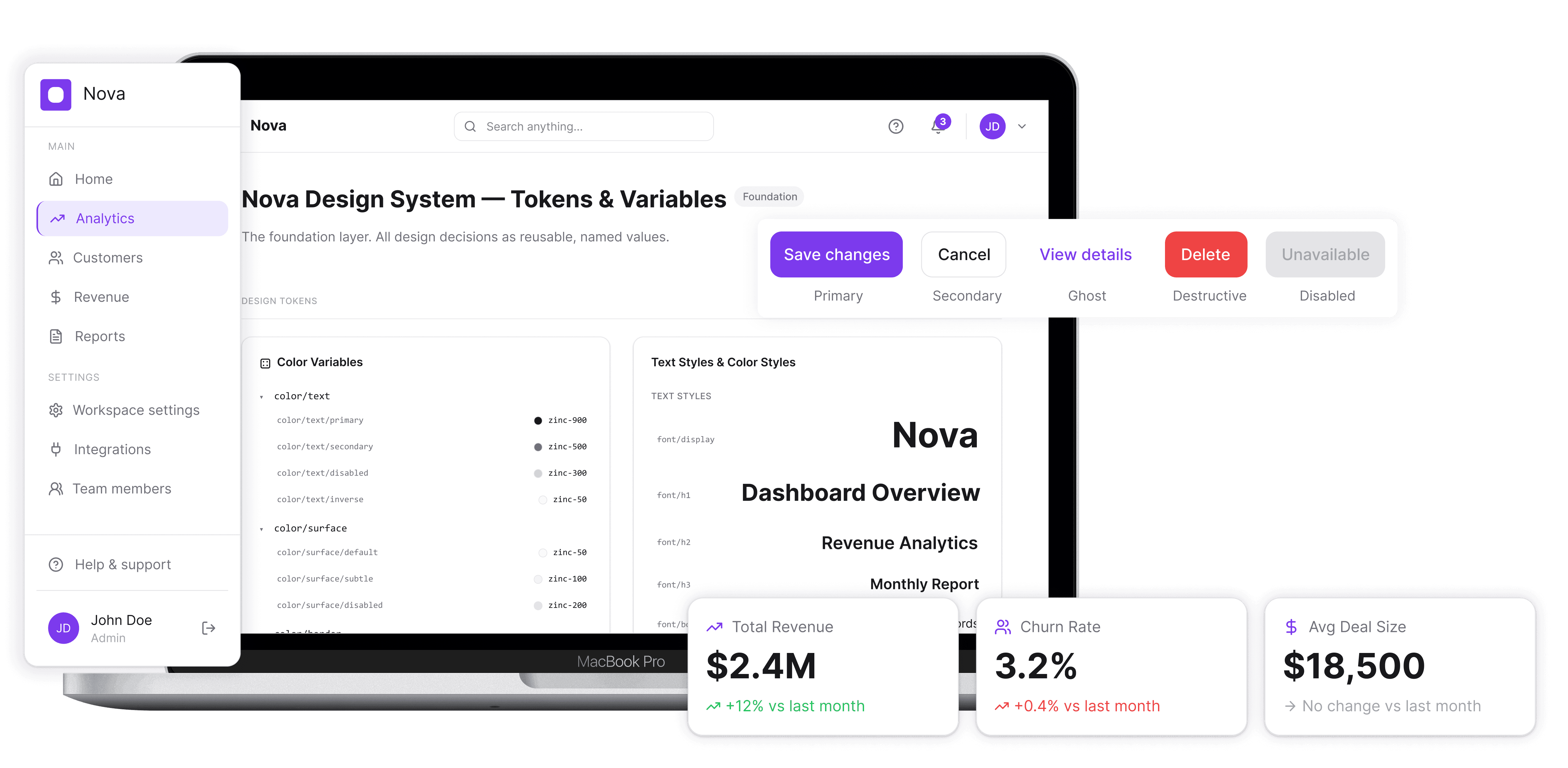
The company's obsolete design system created inconsistent experiences, duplicated work, and communication friction between teams. So, I established a scalable design system addressing the inconsistencies, increasing shipping speed by 28% while improving design-development handoff quality.
The company's obsolete design system created inconsistent experiences, duplicated work, and communication friction between teams. So, I established a scalable design system addressing the inconsistencies, increasing shipping speed by 28% while improving design-development handoff quality.
MY ROLE
Design System Lead
TEAM
PM, Engineers, Design
TIMELINE
6 months | 2025
MY ROLE
Design System Lead
TEAM
PM, Engineers, Design
TIMELINE
6 months | 2025
Index
PROBLEM
PROBLEM
Every designer was building their own version of the same components because we had no shared language, developers were receiving handoffs they couldn't use, and users were dealing with an inconsistent interface that made the product feel broken. The company was paying for the same problem three times. So we asked ourselves:
Every designer was building their own version of the same components because we had no shared language, developers were receiving handoffs they couldn't use, and users were dealing with an inconsistent interface that made the product feel broken. The company was paying for the same problem three times. So we asked ourselves:
How might we build a system that aligns design and development once and for all, without starting from scratch?
How might we build a system that aligns design and development once and for all, without starting from scratch?
IMPACT
IMPACT
Design-to-code cycle time reduction
Design-to-code cycle time reduction
28%
Established design-development alignment
Established design-development alignment
Improved platform coherence
Improved platform coherence
Improved platform coherence
Optimized component creation process
clear criteria for when new components are needed vs. reusing existing ones
Optimized component creation process
clear criteria for when new components are needed vs. reusing existing ones
APPROACH
APPROACH
Rather than starting from scratch, we strategically evolved the system developers were already using — saving engineering time while bringing design and code into alignment.
Rather than starting from scratch, we strategically evolved the system developers were already using — saving engineering time while bringing design and code into alignment.
Planning & Structure
Planning & Structure
Structured the system into four atomic stages and distributed ownership across three designers for parallel execution.
Structured the system into four atomic stages and distributed ownership across three designers for parallel execution.
Collaboration & Quality
Collaboration & Quality
Ran cross-functional reviews after each stage, validating decisions with developers for early adoption.
Ran cross-functional reviews after each stage, validating decisions with developers for early adoption.
EXECUTION
EXECUTION
Tokens and variables
Tokens and variables
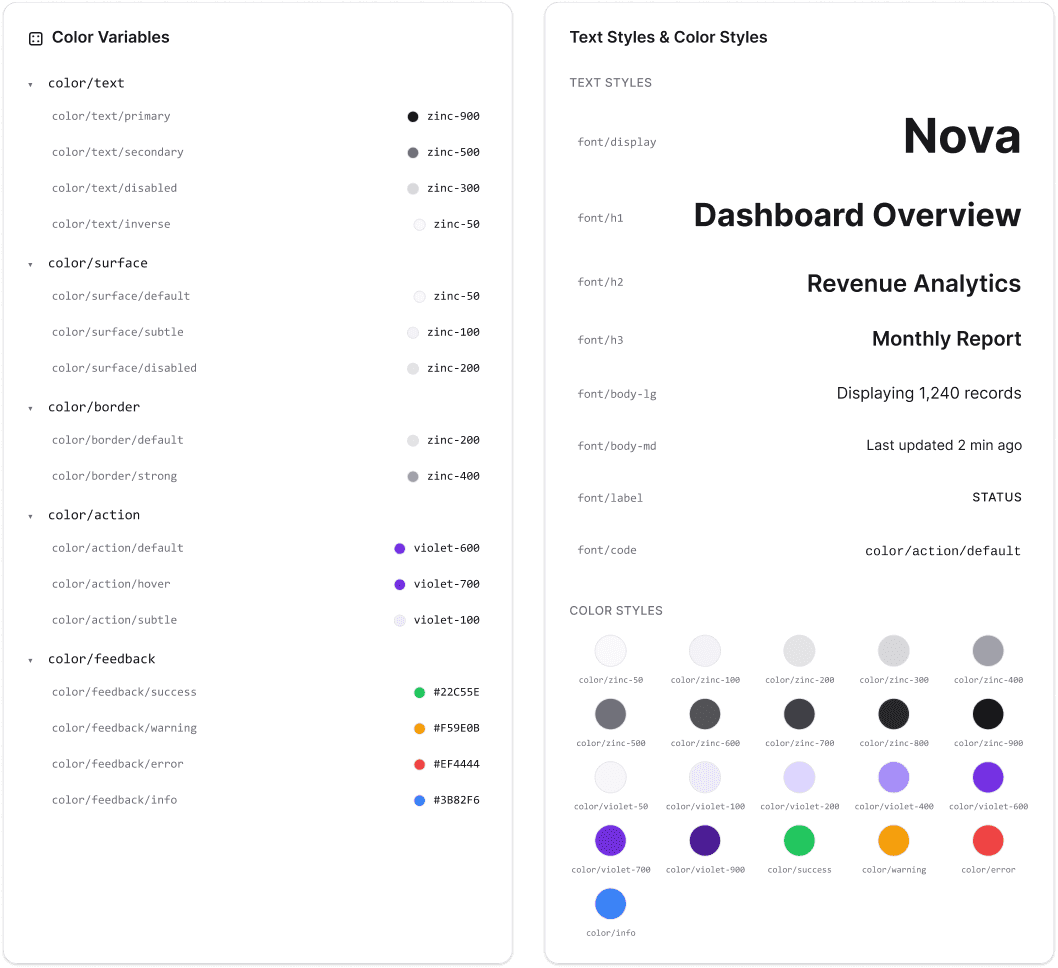
I defined all design decisions as named variables: colors, spacing, radius and shadows, so every component references a single source of truth. Changing one token updates the entire system.
I defined all design decisions as named variables: colors, spacing, radius and shadows, so every component references a single source of truth. Changing one token updates the entire system.
Atoms
Atoms
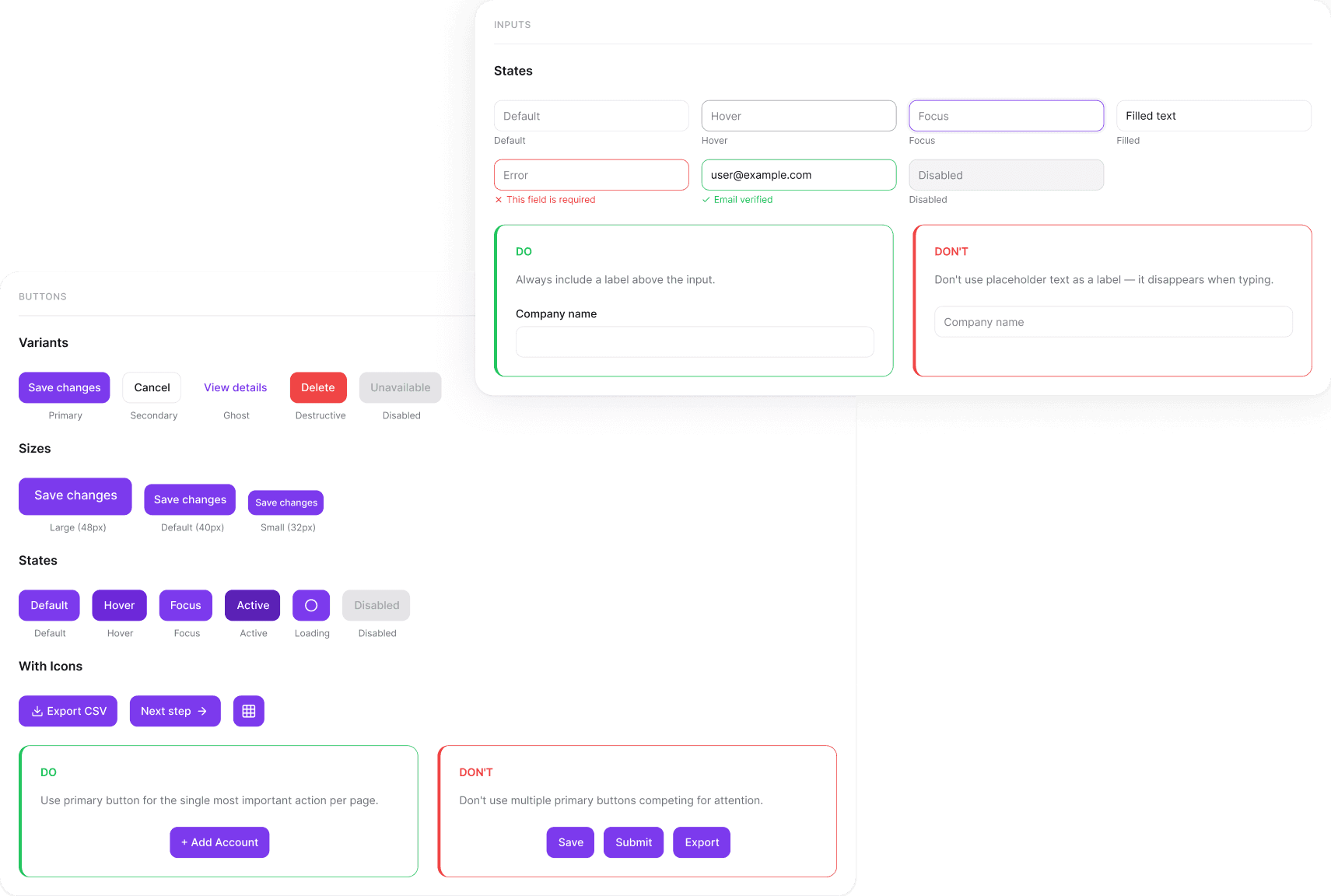
I built the smallest reusable units with full variant matrices: every button size, state and type; every input state; every badge and selection control. Each component documented with Do/Don'ts to guide the team.
I built the smallest reusable units with full variant matrices: every button size, state and type; every input state; every badge and selection control. Each component documented with Do/Don'ts to guide the team.
Key trade-off:
There was a bottleneck managing everything by myself. So I shifted to distributed ownership, keeping final review myself. Both designers bought in fast, the delivery accelerated and quality held.
Key trade-off:
There was a bottleneck managing everything by myself. So I shifted to distributed ownership, keeping final review myself. Both designers bought in fast, the delivery accelerated and quality held.
Molecules
Molecules
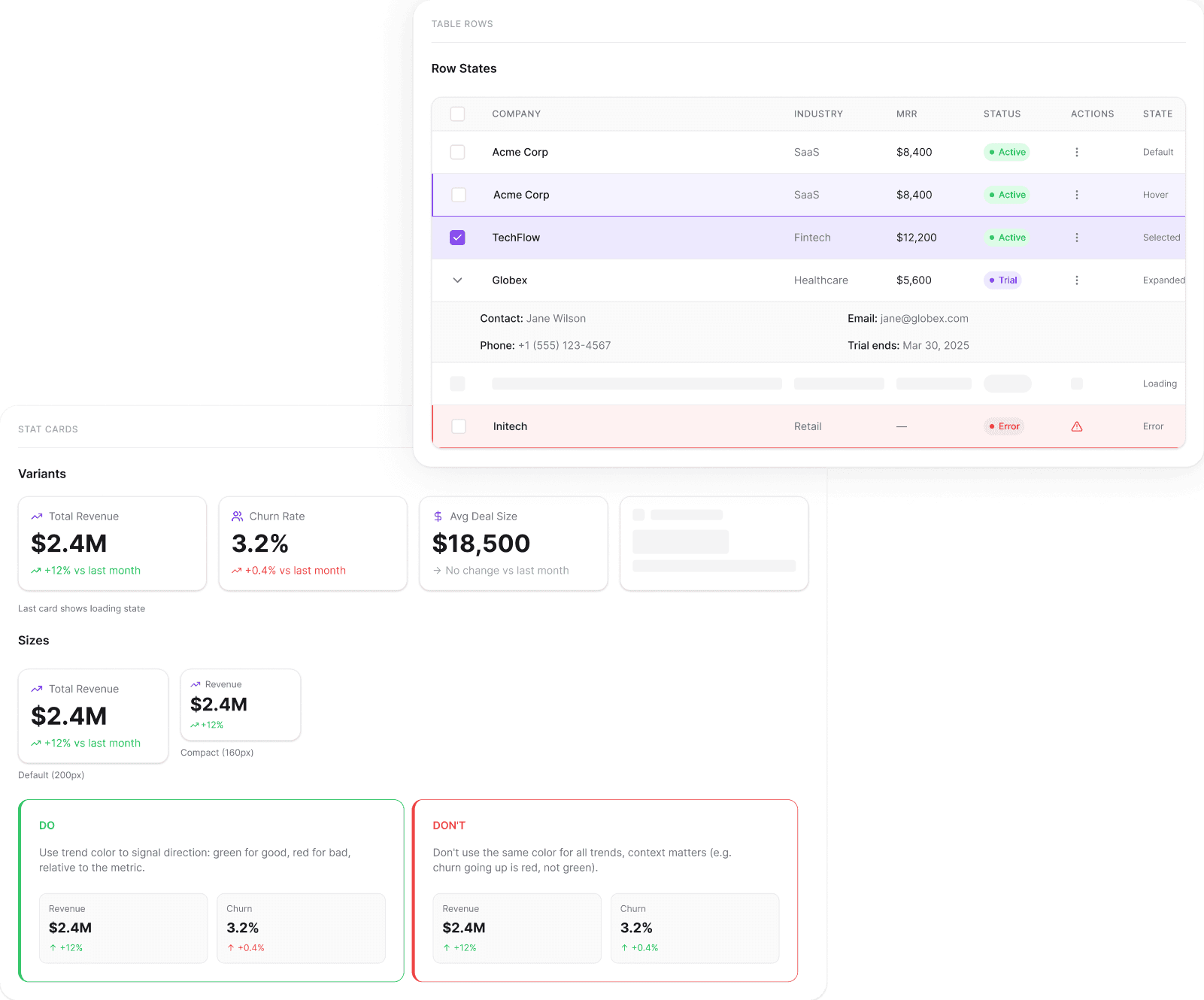
I combined atoms into functional units that solve recurring UI problems — stat cards for data density, empty states for zero-data moments, date pickers and pagination for table interactions.
I combined atoms into functional units that solve recurring UI problems — stat cards for data density, empty states for zero-data moments, date pickers and pagination for table interactions.
Organisms
Organisms
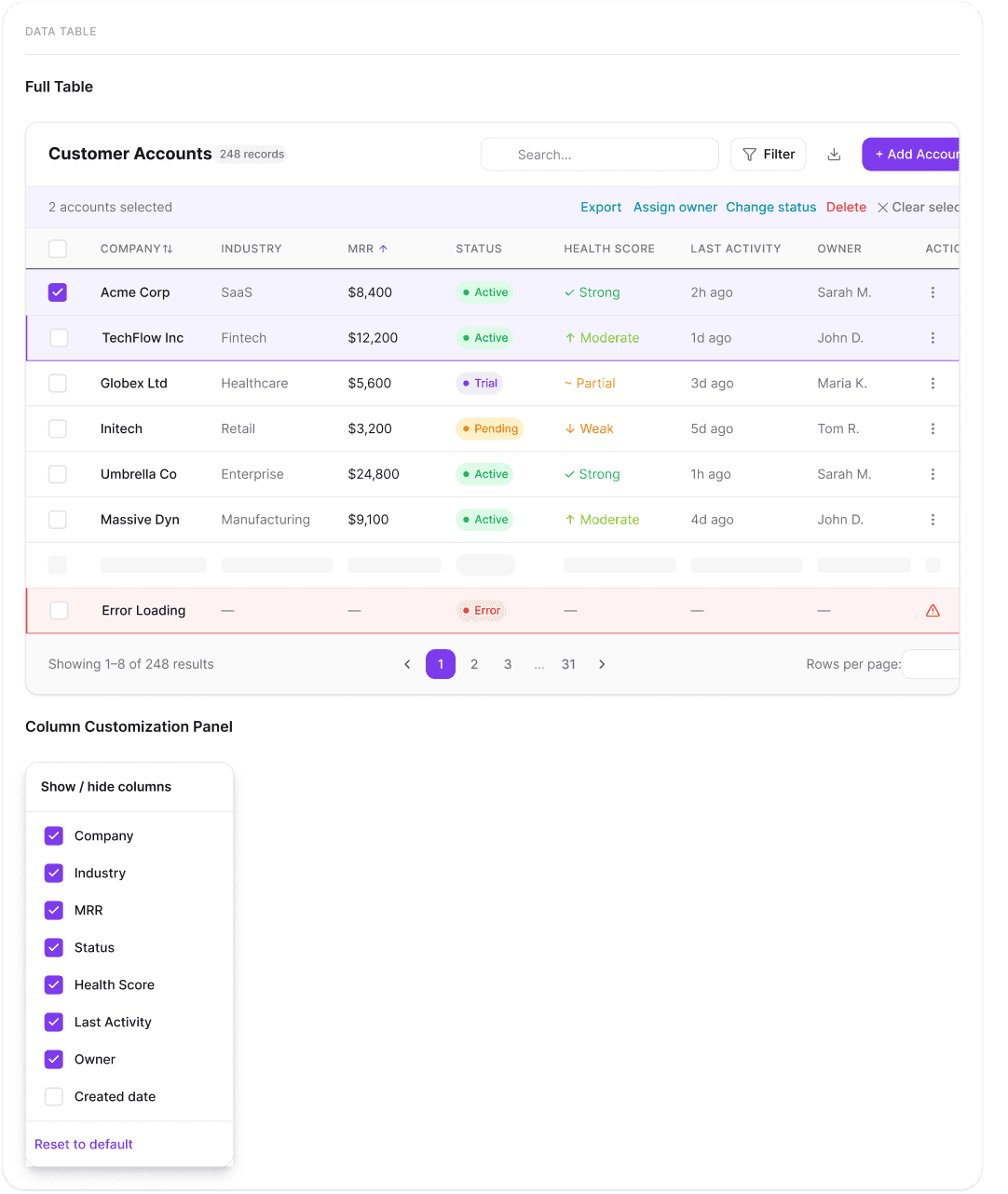
I assembled production-ready complex components: a full data table with sorting, bulk actions, and column customization; a filter panel; navigation; and modals. These drop directly into any page.
I assembled production-ready complex components: a full data table with sorting, bulk actions, and column customization; a filter panel; navigation; and modals. These drop directly into any page.
Templates & Pages
Templates & Pages
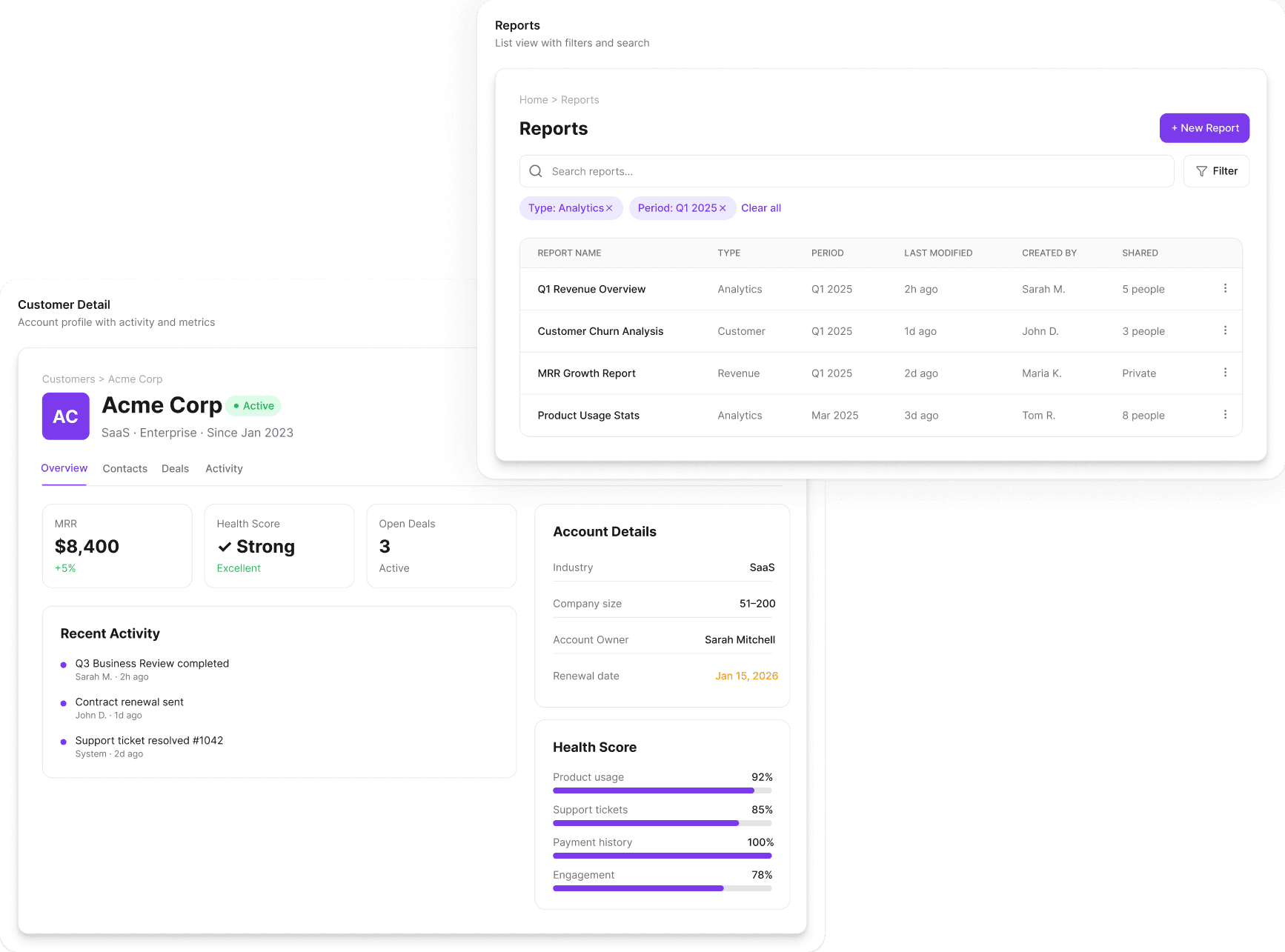
I defined four layout blueprints covering every screen type in the product. Then applied the full system to the hi-fi pages, proving the system works end-to-end in a real context.
I defined four layout blueprints covering every screen type in the product. Then applied the full system to the hi-fi pages, proving the system works end-to-end in a real context.
OUTCOMES
OUTCOMES
KI 1: Design systems are as much about process as patterns. Establishing clear documentation, variant logic, and governance was as important as the components themselves.
KI 1: Design systems are as much about process as patterns. Establishing clear documentation, variant logic, and governance was as important as the components themselves.
KI 2: Collaboration unlocks velocity. Involving developers early and distributing work across designers accelerated delivery without sacrificing quality.
KI 2: Collaboration unlocks velocity. Involving developers early and distributing work across designers accelerated delivery without sacrificing quality.
KI 3: Shared language transforms teams. Once design and development aligned on components and terminology, communication improved dramatically and fewer one-off components were created.
KI 3: Shared language transforms teams. Once design and development aligned on components and terminology, communication improved dramatically and fewer one-off components were created.
LEARNINGS
LEARNINGS
This project taught me that effective design systems require both technical rigor and organizational change. Success wasn't just building components, it was establishing workflows that ensured adoption.
I learned to structure handoff processes that make design decisions clear to developers while helping designers understand technical constraints. Most importantly: distributed ownership with clear leadership accelerates progress while maintaining quality.
It's about trusting the team and providing structure, not micromanaging every decision.
This project taught me that effective design systems require both technical rigor and organizational change. Success wasn't just building components, it was establishing workflows that ensured adoption.
I learned to structure handoff processes that make design decisions clear to developers while helping designers understand technical constraints. Most importantly: distributed ownership with clear leadership accelerates progress while maintaining quality.
It's about trusting the team and providing structure, not micromanaging every decision.