HR SaaS · 2023
Creation Workflow Optimization
The company had a rigid project creation workflow, and clients could not adapt it to their needs, so they left. I ran a full design thinking cycle, worked directly with users to restructure the information architecture, and iterated until we stopped the churn and recovered the conversion rate.
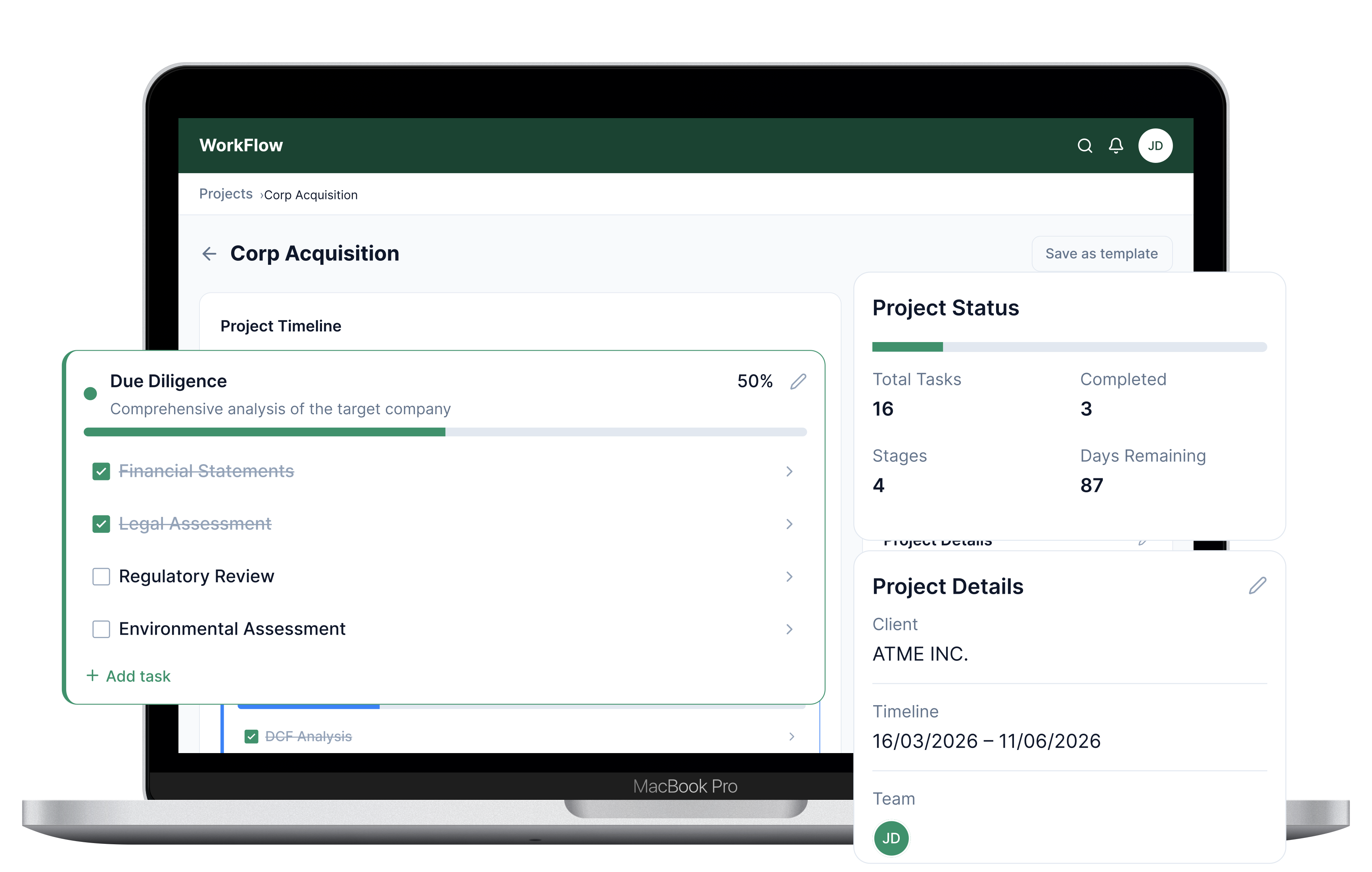
The platform was built around a fixed project creation workflow designed for one type of client. As the company grew, that same structure started fitting none of them. Clients could not customize stages, attach the files they needed, or adapt the process to how they actually worked, so they left. That is why we wondered:
How do we turn a one-size-fits-all platform into a flexible one without breaking what already works?
Adoption Rate
Of the new workflow system
92%
Setup Time
Reduction achieved
30%
Retained key clients who were considering leaving.
Attracted new business based on workflow flexibility.
I led client interviews, redesigned the information architecture, and created prototypes working closely with Product, Development, and Customer Success.
Research & Alignment
Client interviews revealed the need for customizable workflows and file attachments.
Core Design Decisions
Replaced the fixed 4-step flow with customizable stages that support different multimedia formats.
Prototyping
Tested with 5 clients who confirmed the system was flexible, intuitive, and worked for their diverse processes.
Key trade-off: The project was stuck for 2 months.
Design Philosophy
Key trade-off
KI 1:Functional solutions drive retention more than feature completeness. Users accept missing features when you solve their core problem. Shipping working solutions beats waiting for perfection when retention is at stake.
KI 2:Synchronous collaboration accelerates delivery. Daily focused sessions with core stakeholders eliminated weeks of async feedback loops and enabled faster decision-making.
KI 3:Process changes can be as critical as design decisions. Shifting from async feedback to daily alignment sessions removed the bottleneck and enabled on-time delivery.
This project taught me that when clients are churning, you need to move fast and focus on what matters most. Changing how the team works can be as important as the design itself. Daily sessions got everyone aligned and moving forward.
Most importantly: shipping something that works beats waiting to make it perfect. Clients stayed because we solved their core problem, even with some features still missing.
Continue exploring