HR SaaS · 2025
Candidate Data Management & AI Matching System
The company collected extensive candidate data and application information, but recruiters felt overwhelmed. There was no good way to filter through it all. The platform had grown significantly, and core features like filtering were not keeping up.
Recruiters struggled to find top candidates in a fragmented, non-responsive interface that was missing essential tools. They were overwhelmed and frustrated. The business saw it in the numbers: churn was climbing and client trust was eroding. The big question the company faced was:
How do we address all the issues without overloading the team and bringing real value?
Monthly churn
20% → 12%
Converted clients
5+
Established the AI implementation framework that future platform features now use.
I ran three strategic iterations based on the critical issues. For the filter organization and the AI-powered match between candidates and job descriptions, I collaborated with the Data Science team. For the mobile version, I worked closely with engineers to keep it technically viable and consistent with the design system.
Iteration 1 · CV AI Automation
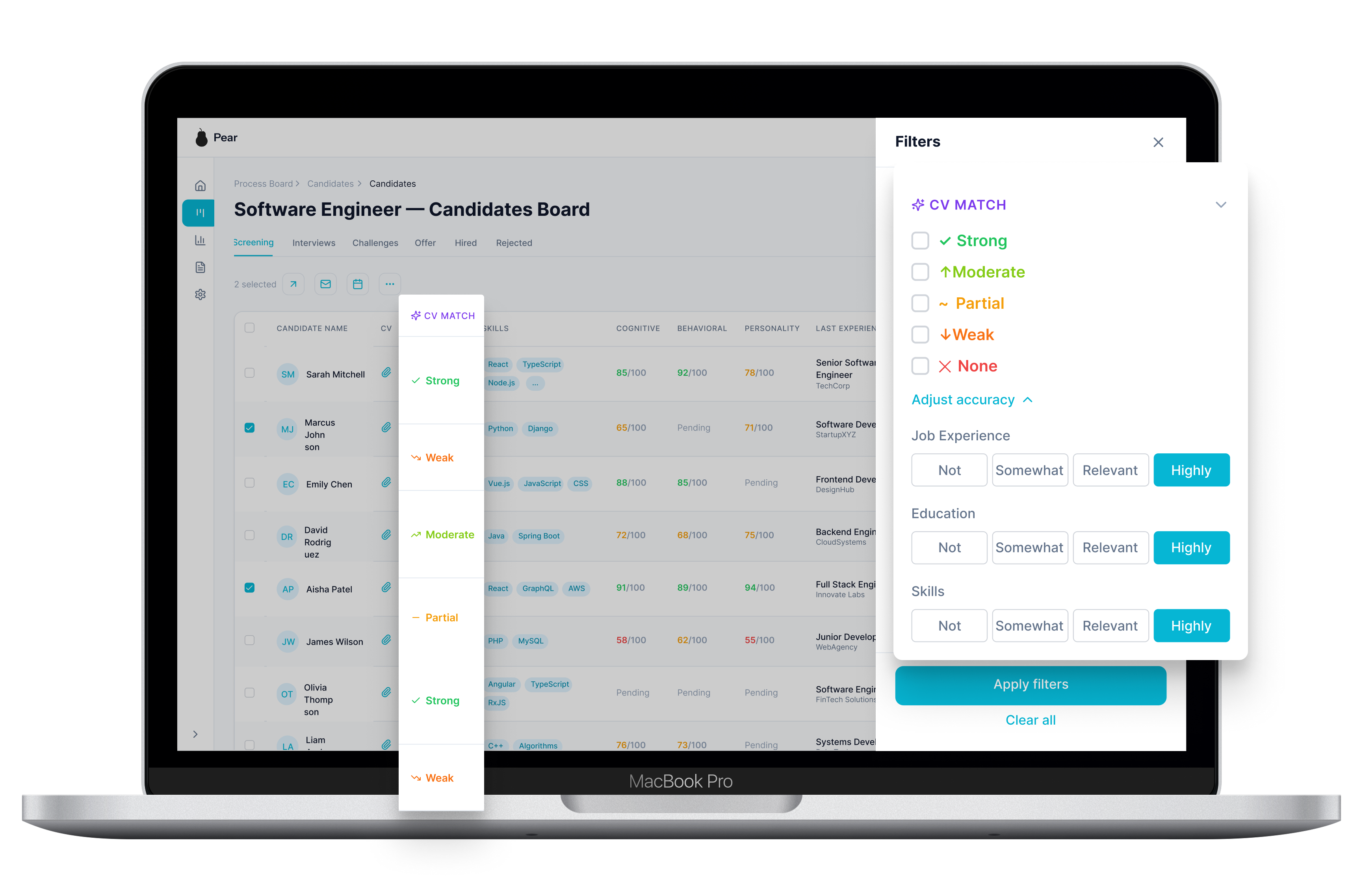
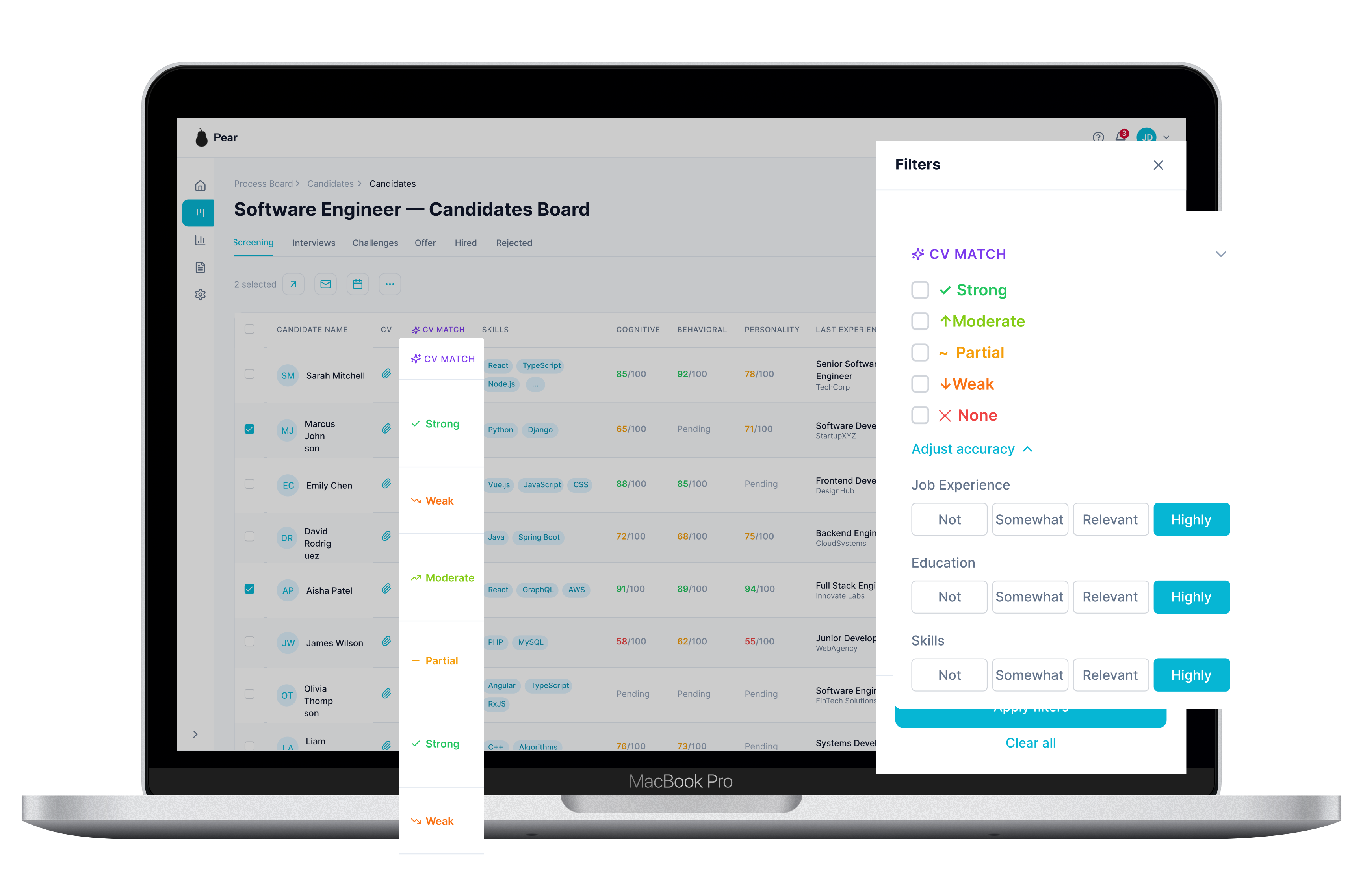
- 1.Column inside the candidates' board with every match level in different colors and icons for better visualization.
- 2.Filter section for the CV match to find top candidates.
- 3.Accuracy settings to adjust the CV match according to the expected experience, education, and skills.
Iteration 2 · Board Simplification
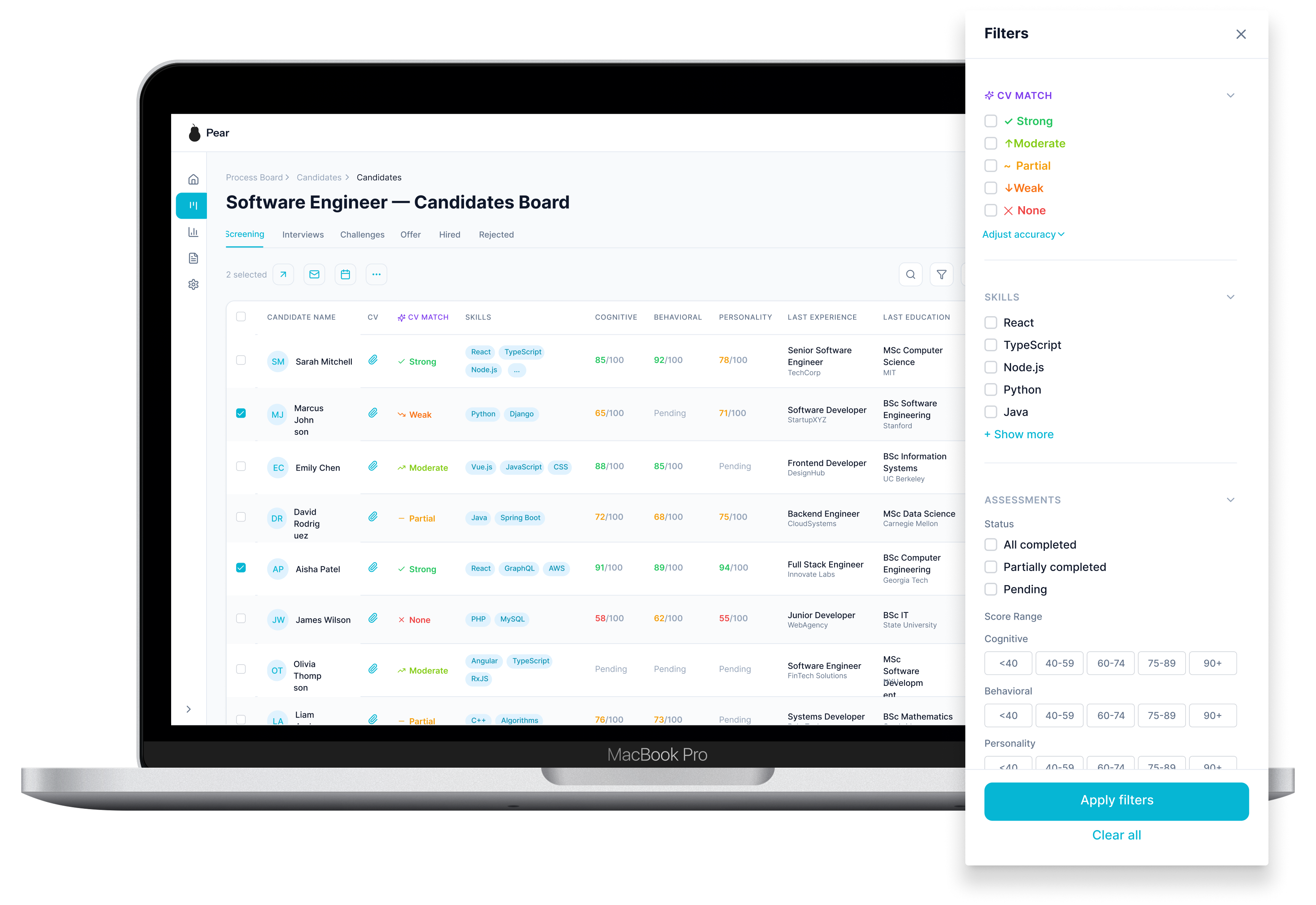
- 1.Duplicated CSV download button (disabled, obsolete).
- 2.Bias-prone filters: nationality and search-bar filters like name, email, ID.
- 3.Inaccessible sliders replaced entirely to improve accessibility.
- 4.The obsolete filter for skills, education, and experience was incorporated inside the main filter panel.
- 5.6+ bulk action buttons were reduced to 3 primary ones and an overflow menu.
- 6.Instead of sliders, I used just checkboxes, tabs, and inputs for accessibility.
- 7.Bulk actions ordered by priority and frequency of use (move candidate, send email, and schedule an interview).
Iteration 3 · Mobile responsiveness
KI 1:AI is powerful for synthesizing complex data, but implementing it reliably takes significant effort and close collaboration with technical specialists.
KI 2:Mobile-first design is essential. Recruiters increasingly work from phones and need a responsive experience from day one.
KI 3:Simplicity beats feature bloat. Adding functionality without thinking about cognitive load creates friction, not value. Users need tools that feel comfortable, not overwhelming.
This project taught me that leading well means knowing when to involve specialists. I could lead the project and make design decisions, but the solution's success depended on continuous collaboration with Data Science, Engineering, and Customer Success. Moving forward, I'm more intentional about identifying the right stakeholders early and integrating their expertise throughout the process, not just at handoff.
Continue exploring